If you’re thinking about keeping an axolotl for the first time, one of the first questions you might ask is: What are the best axolotl breeds for beginners?
Axolotls have become increasingly popular among aquarium enthusiasts in the UK thanks to their unusual appearance, feathery external gills and fascinating aquatic behaviour. Unlike most salamanders, axolotls remain aquatic throughout their lives, making them particularly interesting animals to observe.
However, choosing your first axolotl involves more than selecting the prettiest colour.
At Axolotl UK, we believe that understanding the differences between axolotl varieties is an important first step towards responsible ownership.
In this guide, we’ll explore the most popular axolotl types for beginners, explain their characteristics and help you understand what to consider before bringing one home.
Are There Different Breeds of Axolotls?
Before comparing different types, it’s worth clearing up a common misunderstanding.
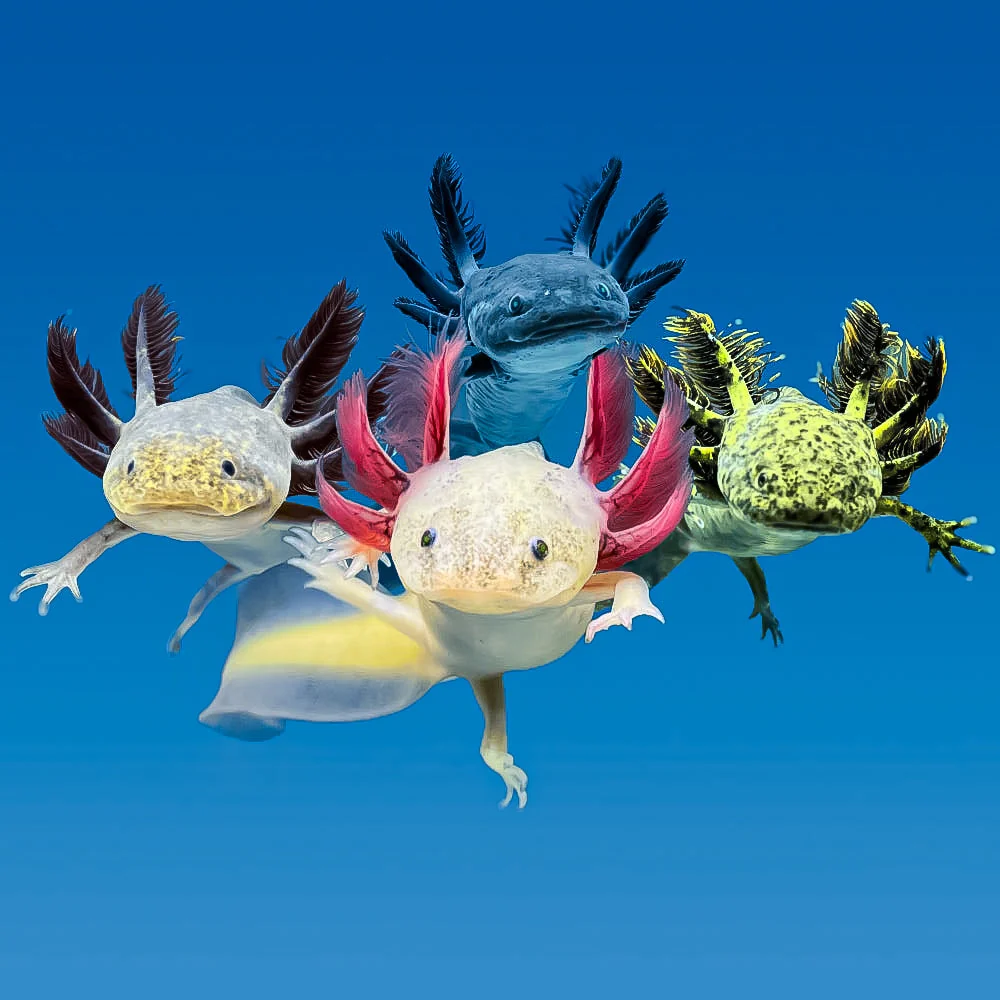
Axolotls do not have separate breeds in the same way that dogs or cats do. Instead, they have different colour morphs, which are genetic variations affecting their pigmentation and appearance.
All commonly kept axolotls belong to the same species, Ambystoma mexicanum.
The most popular colour morphs include leucistic, wild-type, golden albino, white albino, melanoid and copper axolotls.
Although these varieties look different, their basic care requirements are essentially the same. No colour morph is inherently easier to maintain than another.
1. Leucistic Axolotl – A Popular Choice for Beginners

7
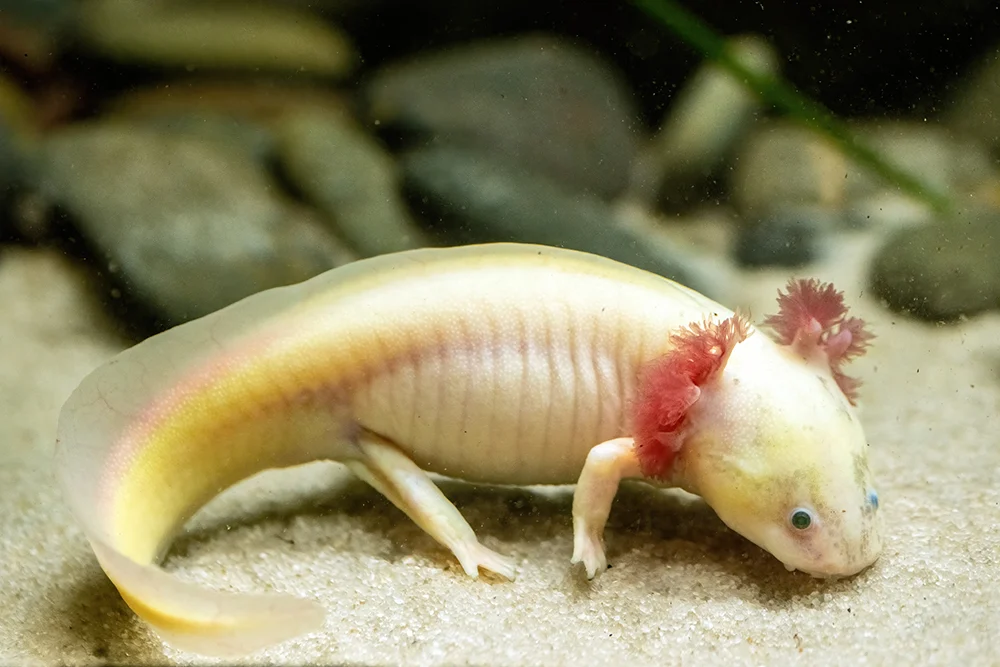
The leucistic axolotl is one of the most recognisable and sought-after varieties in the aquarium hobby.
These axolotls typically have pale pink or white bodies, dark eyes and beautiful pink or reddish external gills.
Their friendly-looking faces and distinctive colouring have made them especially popular with first-time owners.
Why choose a leucistic axolotl?
-
Attractive pink and white appearance
-
Widely recognised among aquarium enthusiasts
-
Dark eyes that contrast with their pale bodies
-
The same straightforward feeding requirements as other morphs
-
Often available from specialist captive breeders
Leucistic axolotls are an excellent option for beginners who prefer a bright, distinctive appearance.
However, their light skin may make dirt, minor injuries or changes in appearance more noticeable. This can be helpful for observation, but it does not make them healthier than other varieties.
Best for: Beginners who want a classic pink axolotl.
2. Wild-Type Axolotl – A Natural-Looking Favourite

7
Wild-type axolotls have the natural-looking colouration most closely associated with axolotls in their original habitat.
They usually feature dark brown, olive or greyish bodies with irregular markings and sometimes golden speckles.
Their natural camouflage gives them a completely different appearance from the pink leucistic variety.
Why are wild-type axolotls good for beginners?
Wild-type axolotls offer several appealing characteristics:
-
Attractive natural colouring
-
Distinctive patterns that vary between individuals
-
Generally familiar to experienced breeders
-
The same diet and aquarium requirements as other morphs
-
A good choice for natural-looking aquarium displays
Some beginners assume wild-type axolotls are tougher because of their darker colouring. However, there is no reliable evidence that their colour alone makes them hardier.
Best for: Beginners who prefer natural colours and a traditional aquatic appearance.
3. Golden Albino Axolotl – A Beautiful Golden Variety

8
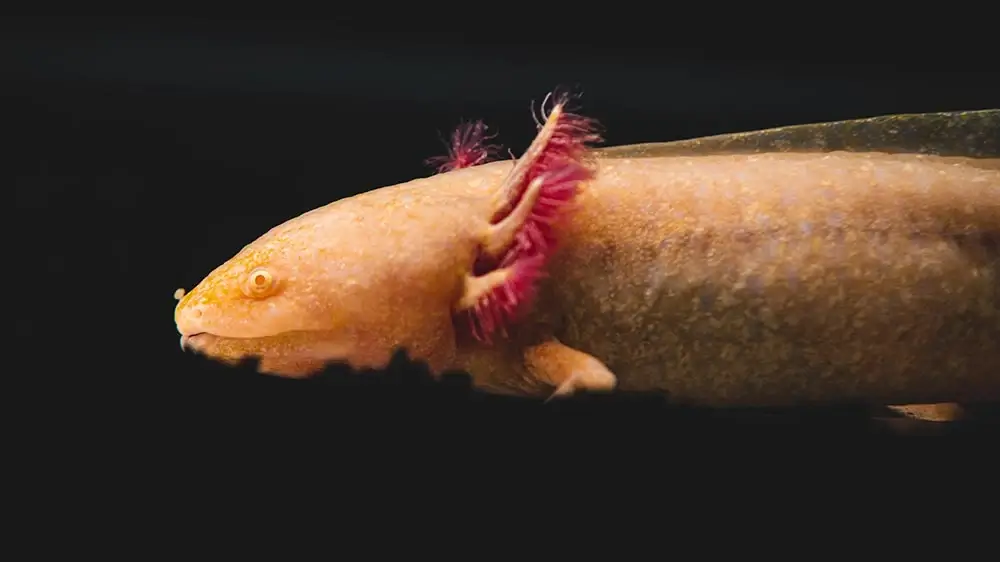
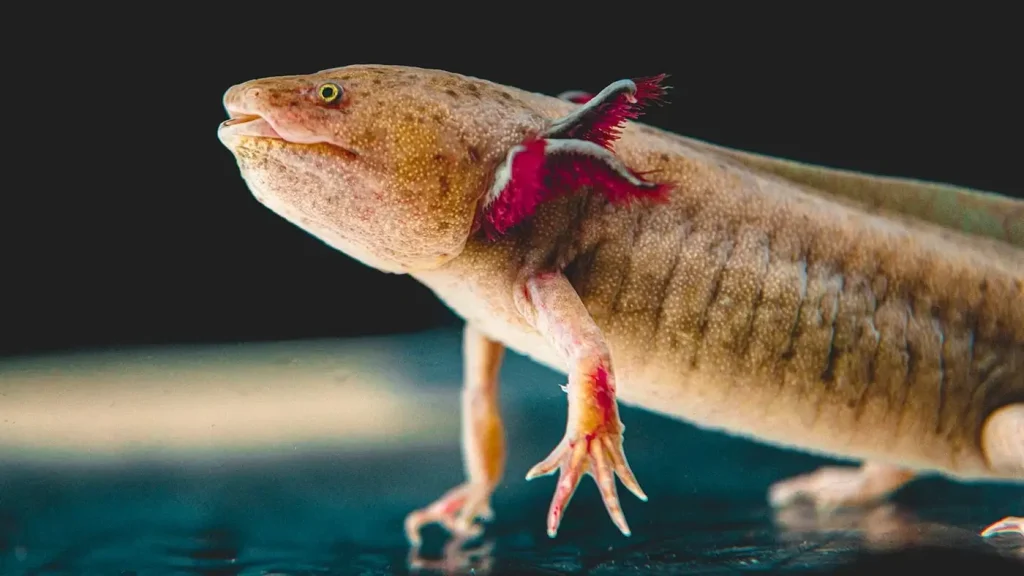
Golden albino axolotls are among the most visually striking varieties available to hobbyists.
They have golden-yellow bodies, pale eyes and light-coloured gills. Some individuals also display attractive reflective markings.
Their unusual appearance makes them a favourite among people looking for something different from the traditional pink axolotl.
What makes golden albino axolotls special?
Golden albino axolotls are appreciated for their:
-
Beautiful yellow and golden pigmentation
-
-
Distinctive appearance in planted or dark-background aquariums
-
Interesting variations in colour intensity
Because albino axolotls lack normal melanin pigmentation, they can be more sensitive to bright lighting. Provide shaded areas, hiding places and subdued aquarium lighting.
Best for: Beginners who want a golden-coloured axolotl and can provide a low-light aquarium.
4. Melanoid Axolotl – A Striking Dark-Coloured Option

7
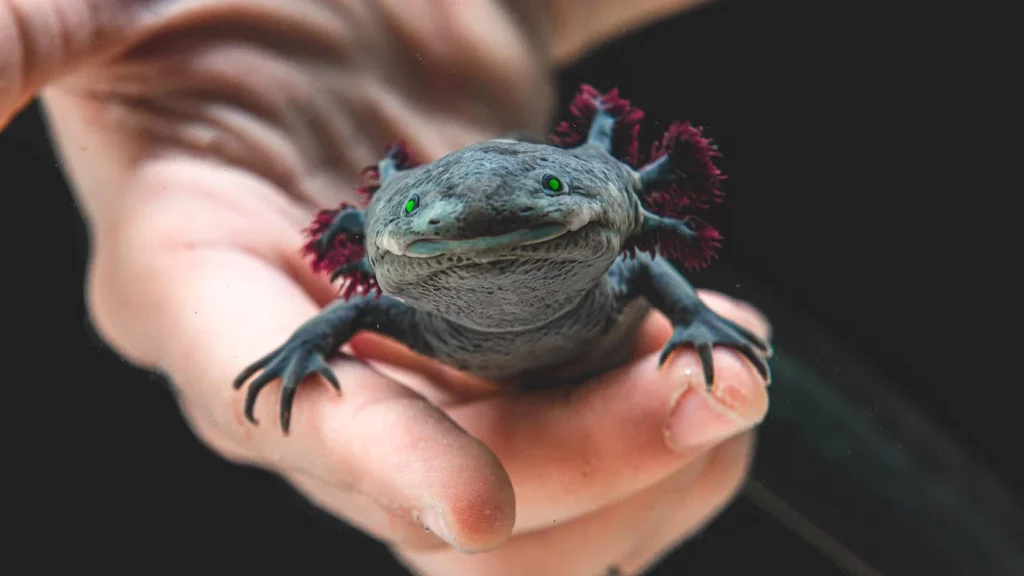
Melanoid axolotls are known for their deep, dark colouring.
They can appear charcoal grey, dark brown or almost black, depending on their genetics and lighting conditions.
Unlike many wild-type axolotls, melanoid varieties lack the reflective pigment cells responsible for shiny or golden speckles.
Why consider a melanoid axolotl?
-
Distinctive dark appearance
-
Attractive contrast with light-coloured aquarium sand
-
-
Similar feeding and husbandry requirements to other morphs
-
A popular alternative to lighter-coloured varieties
Their darker appearance does not mean they require warmer water, less maintenance or different food.
Best for: Beginners who prefer dark-coloured aquatic pets.
5. White Albino Axolotl – An Elegant Pale Variety

7
White albino axolotls are sometimes confused with leucistic axolotls because both can have pale bodies.
However, there is an important difference.
Leucistic axolotls usually have dark eyes, while white albino axolotls have pale or pinkish eyes because they lack normal melanin pigmentation.
Why choose a white albino axolotl?
White albino axolotls are attractive because of their:
-
Soft white or pale pink appearance
-
-
-
Distinctive appearance compared with darker morphs
Like golden albinos, they should be kept away from intense aquarium lighting.
Best for: Beginners who prefer a pale axolotl and can provide a shaded, comfortable environment.
Which Axolotl Is Best for Beginners?
Here is a quick comparison of the five popular varieties.
| Axolotl morph |
Appearance |
Beginner suitability |
| Leucistic |
Pink/white, dark eyes |
Excellent |
| Wild-type |
Brown/olive, speckled |
Excellent |
| Golden albino |
Golden-yellow, pale eyes |
Excellent with subdued lighting |
| Melanoid |
Dark grey or black |
Excellent |
| White albino |
Pale body and eyes |
Excellent with subdued lighting |
Our recommendation: Leucistic and wild-type axolotls are sensible starting points because they are familiar, popular morphs. However, the healthiest captive-bred animal from a reputable breeder is a better choice than selecting a particular colour alone.
What Should Beginners Know Before Buying an Axolotl?
Regardless of which colour morph you choose, every axolotl requires appropriate aquarium conditions.
Axolotls are not ordinary tropical aquarium fish. They are cold-water amphibians with sensitive skin and specialised environmental needs.
1. Choose the right aquarium size
For a single adult axolotl, a tank with at least a 90 × 45 cm footprint is a practical starting point, with approximately 100 litres or more of usable water being preferable.
Larger aquariums generally make water quality easier to maintain.
The tank should provide adequate floor space, secure hiding places and gentle water movement.
2. Maintain cool water temperatures
Axolotls require cool, stable water conditions.
Recommended aquarium temperature
Avoid prolonged temperatures above 20°C. Excessive heat can cause stress and serious health problems.
During warmer UK summer months, an aquarium chiller may be necessary to maintain suitable temperatures.
3. Feed a nutritious diet
Axolotls are carnivorous amphibians.
Suitable foods include earthworms, appropriate axolotl pellets and selected other safe aquatic invertebrates.
Earthworms are often considered an excellent staple food for healthy adult axolotls.
Avoid relying on freeze-dried treats or unsuitable feeder fish as the main diet.
4. Keep the aquarium clean
Good water quality is essential for axolotl health.
Your aquarium should be fully cycled before introducing an axolotl, with ammonia and nitrite maintained at zero.
Regular water testing and partial water changes help keep conditions stable.
Axolotls also need low water flow, as strong currents can cause unnecessary stress.
5. Avoid dangerous aquarium substrates
Small gravel is particularly dangerous because axolotls can accidentally swallow it while feeding.
For beginners, a bare-bottom aquarium or suitable fine sand for appropriately sized axolotls is generally safer than gravel.
Provide smooth hides without sharp edges that could injure their delicate skin.
Where to Buy an Axolotl in the UK
If you’re searching for an axolotl specialist reference, it’s important to research the seller carefully rather than purchasing solely based on colour or price.
For customers looking for an axolotl for sale in the UK, a responsible breeder should be able to explain the animal’s age, diet, health history and current water conditions.
At Axolotl UK, our goal is to help prospective owners make informed decisions before purchasing an axolotl.
When comparing axolotls for sale, look for the following:
-
Captive-bred animals from reputable sources
-
Healthy external gills and intact limbs
-
Clear information about feeding and water parameters
-
Transparent pricing and appropriate transport arrangements
-
Sellers who are willing to answer husbandry questions
Before you purchase an axolotl, make sure you have a fully cycled aquarium and the equipment needed to keep its water cool.
You should also check current UK rules covering amphibian sales, animal welfare and any applicable licensing requirements.
How Much Does an Axolotl Cost in the UK?
The price of an axolotl depends on its age, colour morph, breeder, genetics and availability.
Common morphs such as leucistic and wild-type axolotls may be easier to find than some less common genetic varieties.
However, the initial purchase price is only part of the overall expense.
New owners should also budget for an aquarium, filtration, water testing equipment, hides, suitable food and potentially an aquarium chiller.
In many cases, setting up and maintaining the aquarium will cost significantly more than the axolotl itself.
Frequently Asked Questions About Beginner Axolotls
What is the easiest axolotl to take care of?
No particular colour morph is significantly easier to care for than another. A healthy, well-established captive-bred axolotl is usually a better beginner choice than a very young or poorly maintained animal axolotl for sale UK”.
Are pink axolotls good for beginners?
Yes. Pink leucistic axolotls are popular with beginners, provided their aquarium is properly prepared and their temperature, diet and water quality needs are met.
Are black axolotls rare?
Dark melanoid axolotls are established in captive breeding. Their availability varies by breeder, and they should not automatically be considered rare simply because of their dark colour.
Can beginners keep two axolotls together?
Beginners are generally better off starting with one. Keeping multiple axolotls requires more space, careful feeding, compatible sizes and consideration of breeding or aggression risks.
How long do axolotls live?
With proper care, captive axolotls commonly live around 10–15 years, and some may live longer.
Can axolotls be handled?
Axolotls are best enjoyed as observation pets rather than animals to hold. Their delicate skin and protective mucus coating can be damaged by unnecessary handling.
What is the prettiest axolotl colour?
That depends on personal preference. Leucistic axolotls are loved for their pink appearance, golden albinos for their yellow colouring, and melanoids for their dark pigmentation.
Final Thoughts: Choosing Your First Axolotl
Choosing between different axolotl morphs should be an enjoyable part of preparing for your first aquatic pet.
Whether you prefer a pink leucistic, a naturally patterned wild-type, a golden albino or a dark melanoid axolotl, the most important consideration is providing the correct environment.
For beginners, we recommend prioritizing a healthy captive-bred animal, a suitable aquarium and reliable husbandry information over unusual colours.
If you’re researching where to buy axolotl UK, take time to compare reputable breeders, understand the long-term commitment and prepare your aquarium before making a purchase.
At Axolotl UK, we aim to make it easier for new enthusiasts to learn about axolotls and choose responsibly.