Most amphibians begin their lives in water before undergoing a remarkable transformation that allows them to live on land. Frogs develop from tadpoles into adults, while many salamanders gradually lose their external gills and develop the features needed for terrestrial life.
But the axolotl follows a very different path.
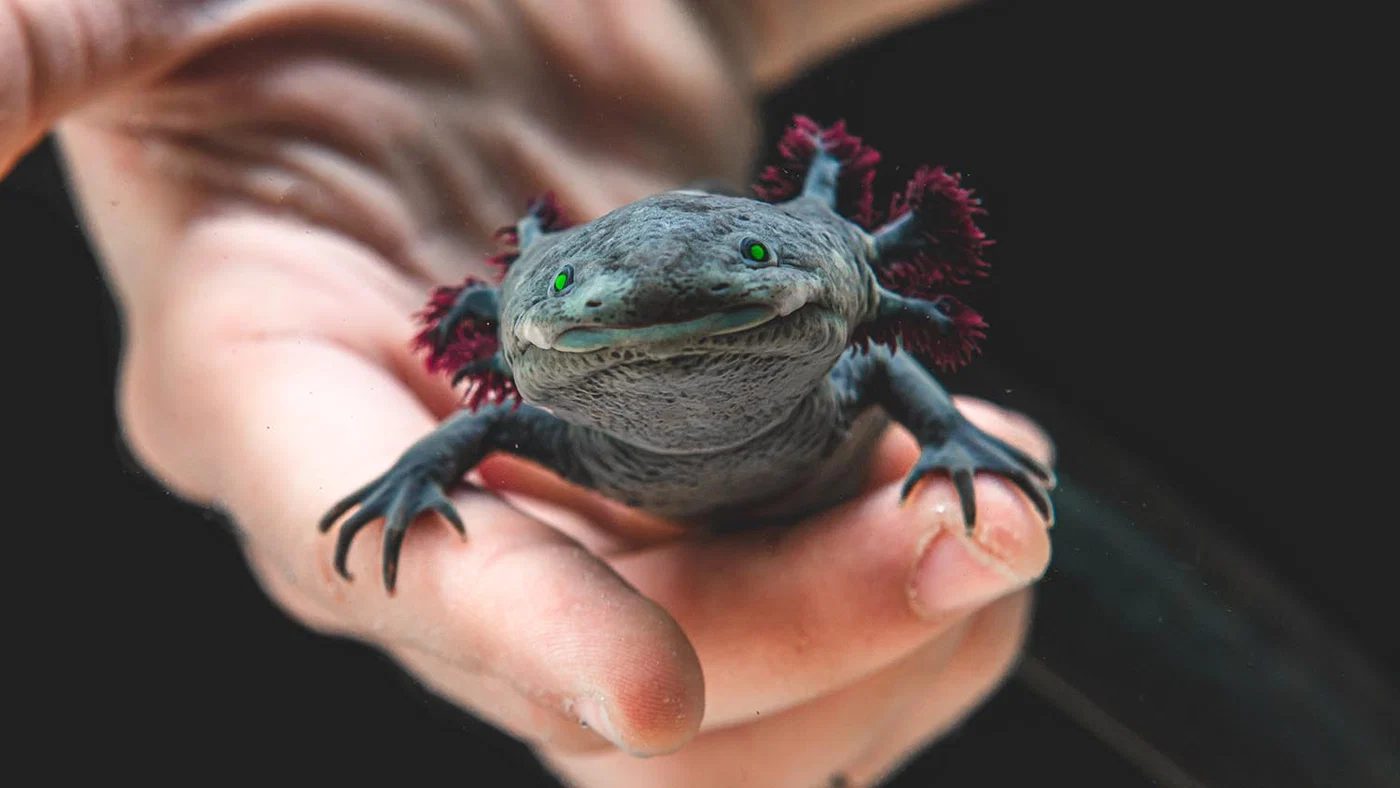
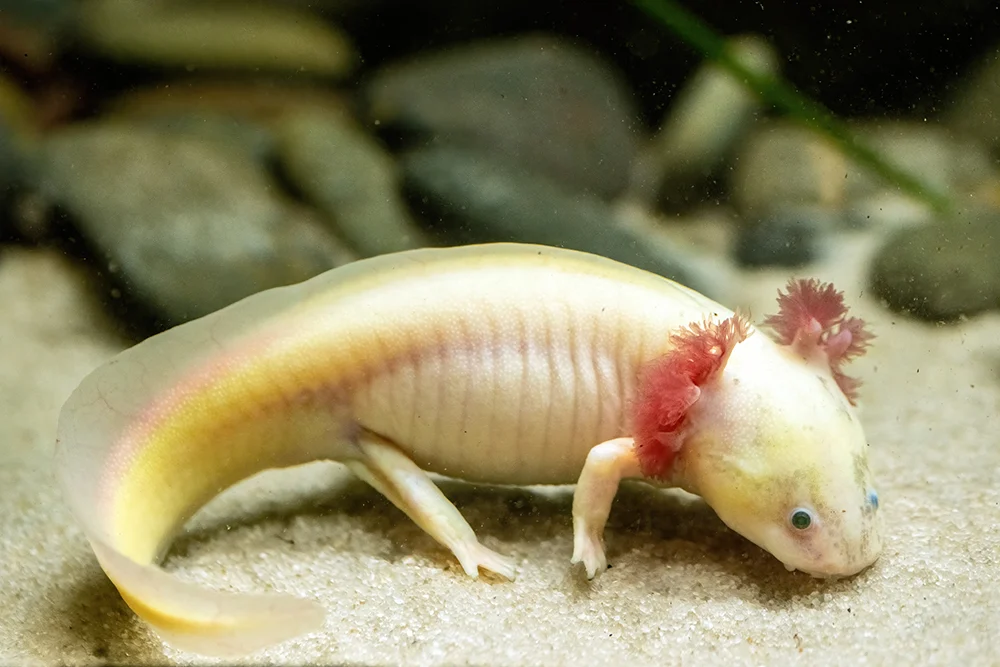
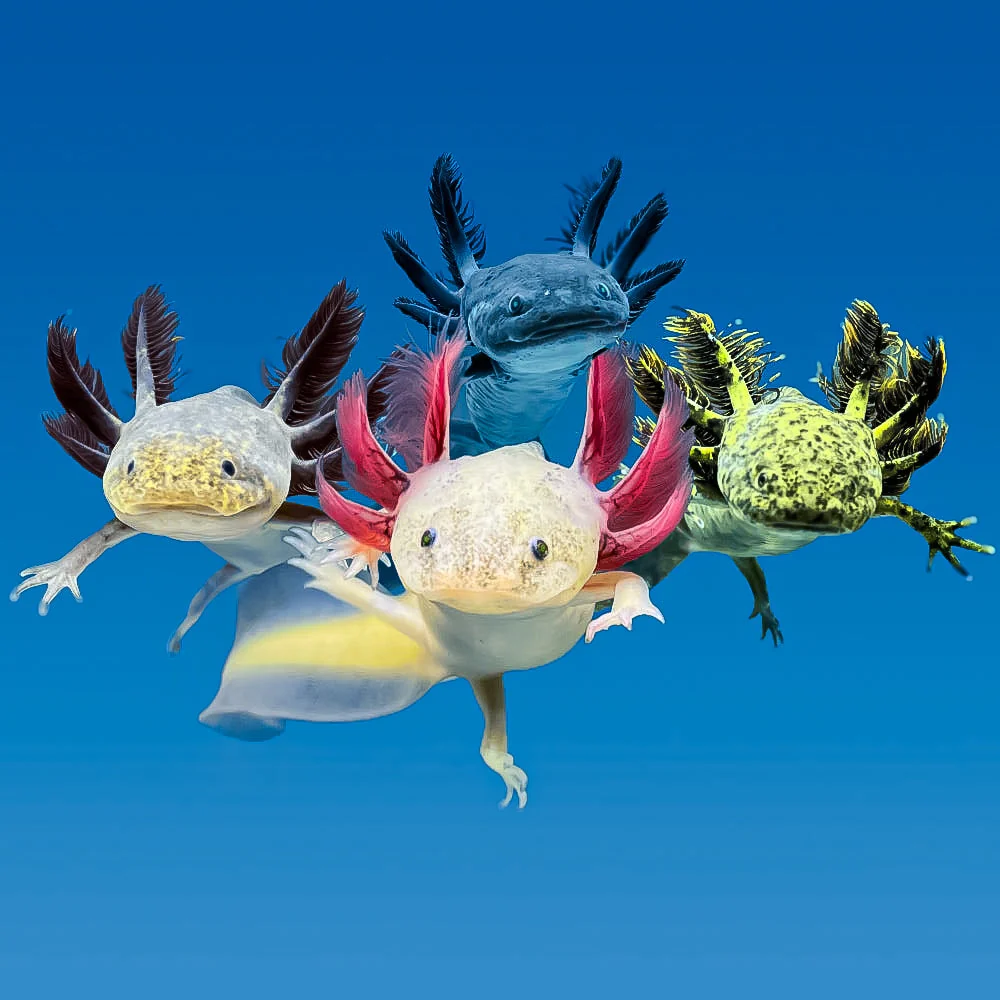
Known scientifically as Ambystoma mexicanum, the axolotl is one of the most fascinating amphibians in the world. Unlike most salamanders, it normally retains its juvenile aquatic characteristics throughout adulthood, even after becoming sexually mature.
This unusual biological process has made the axolotl a subject of scientific research and a popular species among aquarium enthusiasts.
So, what is the axolotl life cycle, why don’t axolotls undergo normal metamorphosis, and can they ever transform into land-dwelling salamanders?
At Axolotl UK, we believe understanding the biology of these remarkable animals is essential for anyone interested in keeping them responsibly.
In this guide, we’ll explore every stage of the axolotl life cycle, explain the science behind neoteny and examine what makes axolotls different from other amphibians.
What Is the Life Cycle of an Axolotl?

7
The axolotl life cycle is unusual because the animal reaches adulthood without undergoing the typical metamorphosis seen in many other amphibians.
While frogs develop lungs, lose their tails and leave the water, axolotls normally remain aquatic throughout their lives.
Their development can be divided into five main stages:
-
-
-
-
-
Unlike the life cycles of many salamanders, the normal axolotl life cycle does not include a transition to a terrestrial adult.
This characteristic is known as neoteny, a form of paedomorphosis in which juvenile physical features are retained into adulthood.
The Five Stages of the Axolotl Life Cycle
Axolotl life cycle overview
Axolotls reproduce as aquatic adults, completing their life cycle without normal terrestrial metamorphosis.
Stage 1: The Egg Stage
The axolotl life cycle begins when a female lays fertilised eggs.
During reproduction, the male deposits packets of sperm called spermatophores, which the female collects through her cloaca.
Following fertilisation, the female attaches eggs individually to aquatic plants, decorations and other surfaces.
A female may lay several hundred eggs in a single breeding event, although the number varies depending on her size, age and condition.
Axolotl eggs are surrounded by a protective jelly-like coating.
Inside each egg, the developing embryo gradually forms the structures needed for life outside the egg.
Under suitable conditions, eggs commonly hatch within approximately 10–14 days, although temperature can affect development time.
Stage 2: The Hatchling Stage
After hatching, baby axolotls enter the larval stage.
At this point, they are extremely small and delicate.
Newly hatched axolotls initially rely on their remaining yolk reserves before beginning to feed independently.
As they develop, they require appropriately sized live foods.
Suitable first foods may include newly hatched brine shrimp and other small aquatic invertebrates.
During this stage, their external gills become increasingly noticeable, and their bodies gradually develop stronger swimming abilities.
Young axolotls require excellent water quality and careful feeding.
They may also bite one another, particularly when food is insufficient or individuals differ significantly in size.
For this reason, raising axolotl hatchlings requires considerably more experience than keeping a single adult.
Stage 3: The Juvenile Stage
As hatchlings grow, they enter the juvenile stage.
Their bodies become longer, their limbs develop further, and their external gills become more prominent.
Juvenile axolotls increasingly resemble miniature adults.
During this stage, their diet can gradually transition to larger suitable foods as their mouths and digestive systems develop.
Growth rates depend on several factors, including genetics, nutrition, water quality and temperature.
One of the most fascinating aspects of juvenile axolotls is that they already display many of the physical features they will retain throughout adulthood.
Unlike many other salamanders, they do not normally begin a transformation towards life on land.
Stage 4: Sexual Maturity
Axolotls generally reach sexual maturity at around 12–18 months, although some mature earlier or later depending on their conditions and individual development.
At this stage, they become capable of reproduction.
Males and females also develop physical differences that can help experienced keepers distinguish between them.
Adult males often have a more pronounced cloacal swelling, while females may have broader bodies, particularly when carrying eggs.
However, these characteristics are not always reliable in young or immature animals.
Despite becoming reproductively mature, axolotls continue to retain their external gills, tail fins and aquatic lifestyle.
This is what makes their development so unusual.
Stage 5: The Reproductive Adult
Once mature, an axolotl can reproduce without ever leaving the water.
Unlike many amphibians, it does not need to transform into a terrestrial form before breeding.
Adult axolotls continue living underwater, feeding on aquatic prey and breathing through a combination of external gills, skin and lungs.
In captivity, healthy axolotls commonly live for approximately 10–15 years, with some individuals living longer.
Responsible owners should not attempt breeding without understanding the substantial space, feeding and welfare requirements involved in raising large numbers of young axolotls.
What Is Neoteny in Axolotls?
Neoteny is one of the most important concepts in understanding axolotl biology.
It refers to the retention of juvenile physical characteristics into adulthood.
In axolotls, this means that the animal becomes sexually mature while continuing to display features normally associated with aquatic salamander larvae.
These include:
-
-
-
-
A predominantly underwater lifestyle
-
The absence of normal terrestrial metamorphosis
Technically, neoteny is a form of paedomorphosis, a broader biological term describing the retention of ancestral juvenile characteristics in sexually mature descendants.
This developmental strategy is one of the reasons axolotls are so valuable to scientists studying evolution, developmental biology and regeneration.
Why Don’t Axolotls Undergo Normal Metamorphosis?

6
Most salamanders undergo metamorphosis as they develop.
This process involves significant changes in body structure and physiology, often including the reduction or loss of external gills and adaptations for terrestrial life.
Axolotls normally do not undergo this transformation because of differences in the hormonal regulation of their development.
In many amphibians, thyroid hormones play a central role in triggering metamorphosis.
Axolotls have a distinctive thyroid-hormone regulatory system that does not normally initiate the same developmental transition under natural conditions.
Instead, they retain their larval features while becoming reproductively mature.
This adaptation is associated with their evolutionary history in aquatic environments.
However, it is important to understand that axolotls are not simply immature animals that have failed to develop.
They are fully mature amphibians with a specialised life cycle.
Can Axolotls Turn Into Salamanders?
One of the most frequently asked questions about axolotls is whether they can transform into land-dwelling salamanders.
The answer is yes, but this is extremely unusual and should never be deliberately attempted by pet owners.
Under certain experimental conditions, axolotls can undergo metamorphosis when exposed to thyroid hormones.
Rare cases of spontaneous metamorphosis have also been reported.
During metamorphosis, an axolotl may experience major physical changes, including the reduction of its external gills, changes in skin structure and the loss of its prominent aquatic tail fin.
Its body becomes more adapted to terrestrial life.
However, induced metamorphosis can place significant stress on the animal and may cause serious health complications.
There is no husbandry benefit to forcing a healthy pet axolotl to transform.
At Axolotl UK, we strongly recommend keeping axolotls in the aquatic conditions appropriate for their natural development.
Axolotl vs Other Amphibians: What’s the Difference?
The easiest way to understand the axolotl’s unusual life cycle is to compare it with other amphibians.
| Feature |
Axolotl |
Typical frog |
Many terrestrial salamanders |
| Starts life in water |
Yes |
Yes |
Often |
| Undergoes normal metamorphosis |
No |
Yes |
Usually |
| Retains external gills as an adult |
Yes |
No |
Usually not |
| Lives primarily on land as an adult |
No |
Often |
Often |
| Reproduces while retaining larval features |
Yes |
No |
Usually not |
Not every amphibian follows the same pattern. Some salamanders also display paedomorphosis, and some amphibians remain largely aquatic as adults.
Nevertheless, the axolotl is one of the best-known examples of an amphibian that reaches reproductive maturity without typical metamorphosis.
How Does the Axolotl Breathe Without Metamorphosis?
One of the most interesting features of the axolotl is its ability to obtain oxygen in several ways.
External gills
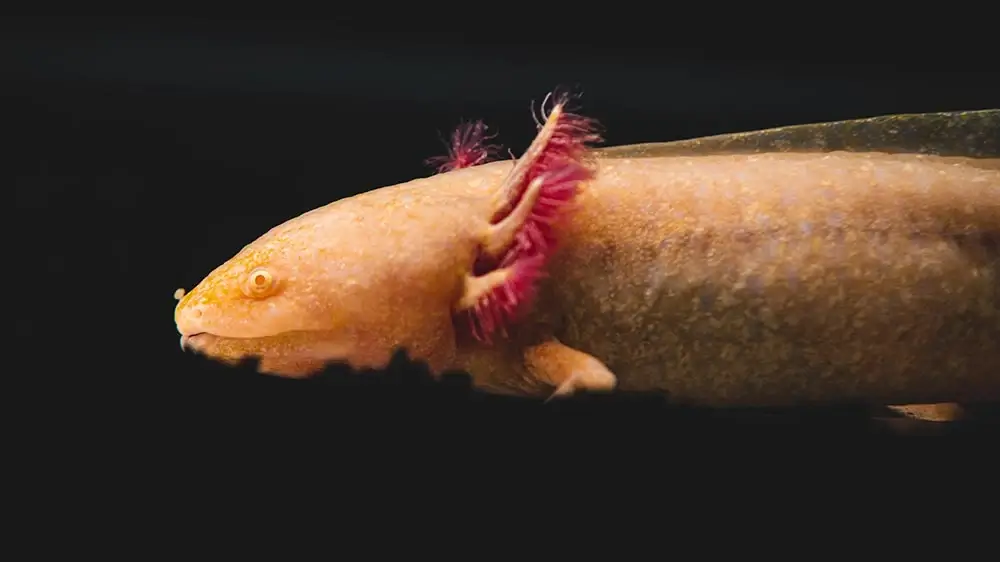
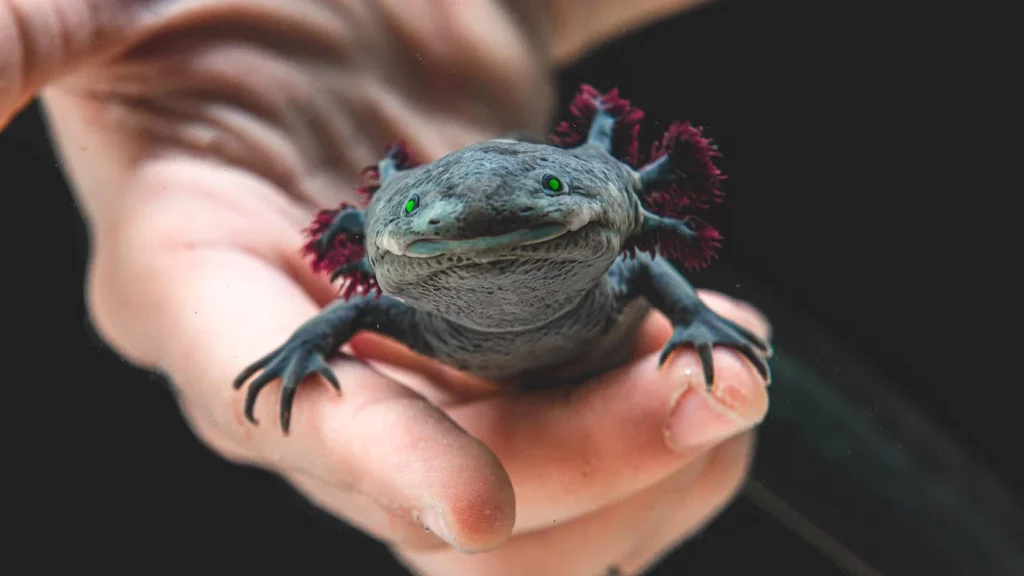
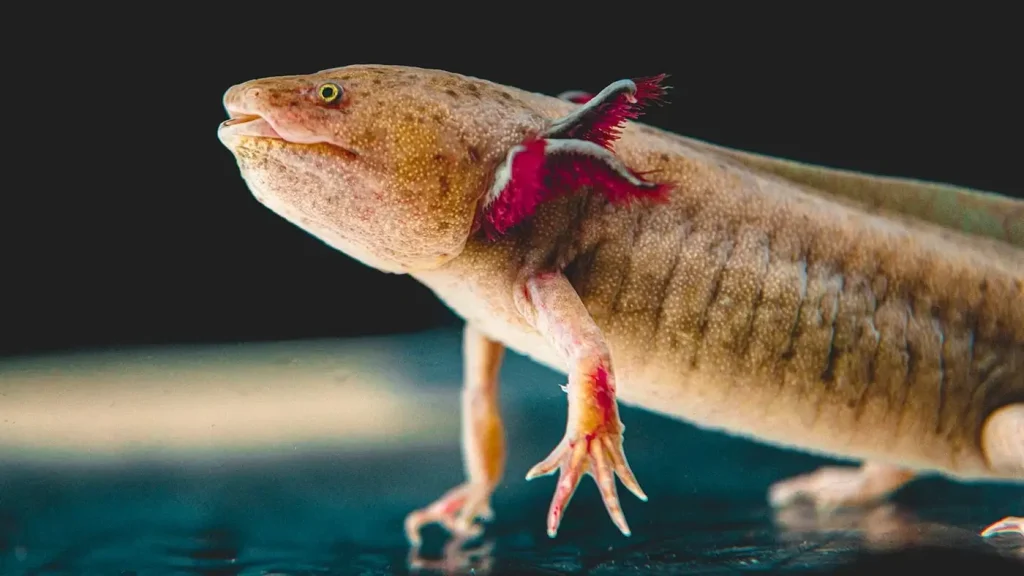
The feathery structures on either side of an axolotl’s head are external gills.
These structures provide a large surface area for gas exchange, allowing the animal to absorb oxygen from the surrounding water.
Skin respiration
Axolotls can also exchange gases through their skin.
Their moist, permeable skin plays an important role in respiration.
Lungs
Although axolotls remain aquatic, they also possess lungs.
You may occasionally observe an axolotl swimming to the surface to gulp air.
This behaviour can be normal, but frequent surface gasping may indicate unsuitable water conditions or inadequate oxygen availability.
These respiratory adaptations allow axolotls to remain underwater throughout their lives.
How Does the Axolotl Life Cycle Affect Its Care?
Understanding the axolotl life cycle is particularly important for anyone considering keeping one as a pet.
Because axolotls remain aquatic, they require a suitable freshwater aquarium throughout their lives.
They should not be kept in a terrestrial enclosure or encouraged to leave the water.
Here are some of their essential care requirements.
| Requirement |
Recommended conditions |
| Water temperature |
Ideally 16–18°C |
| Aquarium size |
Approximately 100 litres or more for one adult, with ample floor space |
| Filtration |
Gentle flow and a fully cycled biological filter |
| Ammonia and nitrite |
0 ppm |
| Diet |
Earthworms, suitable axolotl pellets and appropriate aquatic invertebrates |
| Substrate |
Bare bottom or appropriate fine sand |
| Lighting |
Subdued, with shaded hiding places |
| Handling |
Avoid unnecessary handling |
During warmer months in the UK, maintaining cool aquarium temperatures can be challenging.
Some owners may need an aquarium chiller to prevent dangerous temperature increases.
Providing stable water conditions is essential at every stage of an axolotl’s life.
Why Is the Axolotl Important to Scientific Research?
The axolotl’s unusual development has made it an important model organism in scientific research.
Researchers study axolotls to understand how developmental processes are regulated and why different amphibians follow different life cycles.
Their retention of juvenile features provides valuable opportunities to investigate the relationship between growth, sexual maturity and metamorphosis.
Axolotls are also famous for their regenerative abilities. Axolotl for Sale UK
They can regrow lost limbs and repair certain complex tissues, making them particularly valuable for studying tissue regeneration.
Scientists investigate the cellular and molecular mechanisms involved in these processes in the hope of improving our understanding of wound healing and regenerative medicine.
However, axolotl research has not yet produced a medical treatment that allows humans to regenerate entire lost limbs.
The animal’s scientific importance is one more reason to appreciate and protect this remarkable species.
Are Axolotls Endangered in the Wild?
Despite their popularity in aquariums, wild axolotls are Critically Endangered.
They are native to the freshwater lake systems around Mexico City, particularly the remaining waterways of Xochimilco.
Their natural habitat has been affected by urban expansion, pollution, invasive species and habitat degradation.
Although captive-bred axolotls are found in aquariums around the world, this does not mean wild populations are secure.
Conservation efforts focus on protecting and restoring their natural habitat, improving water quality and supporting sustainable populations.
For prospective owners, choosing captive-bred animals from responsible breeders helps avoid encouraging the collection of wild axolotls.
Where to Buy an Axolotl in the UK
If learning about the axolotl life cycle has inspired you to consider keeping one, it’s important to prepare properly before purchasing.
At Axolotl UK, we aim to help new and experienced aquarium enthusiasts understand the responsibilities involved in caring for these unusual amphibians.
When researching an axolotl for sale UK, always choose a reputable seller who can provide accurate information about the animal’s age, feeding habits, health and current aquarium conditions.
Whether you’re comparing axolotls for sale, searching for an axolotl for sale in the UK, or wondering where to buy an axolotl in the UK, remember that a healthy animal and a suitable environment matter more than appearance alone.
Before you buy an axolotl, make sure your aquarium is fully cycled, appropriately sized, and can maintain cool water temperatures.
You should also confirm that the animal is captive-bred and that the seller complies with applicable UK animal welfare and sales requirements.
Frequently Asked Questions About the Axolotl Life Cycle
What are the stages of an axolotl’s life cycle?
The main stages are egg, hatchling, juvenile, sexually mature adult and reproductive adult. Axolotls normally complete their life cycle without transforming into terrestrial salamanders.
Why do axolotls stay babies forever?
Axolotls retain juvenile physical characteristics through a process known as neoteny. However, they are not permanently babies; they become fully mature and capable of reproduction.
Do axolotls ever lose their gills?
Healthy axolotls normally retain their external gills throughout life. During rare or experimentally induced metamorphosis, the gills may shrink and disappear.
Can an axolotl survive on land?
Normal axolotls are aquatic animals and should not be kept on land. Only animals that have undergone metamorphosis develop the adaptations associated with terrestrial life, and inducing this process is not recommended.
How long does it take for an axolotl to become an adult?
Axolotls commonly reach sexual maturity at approximately 12–18 months, although individual development varies.
Do axolotls lay eggs or give birth?
Axolotls lay eggs. Females deposit fertilised eggs on aquatic plants and other surfaces after collecting spermatophores deposited by males.
Are axolotls related to salamanders?
Yes. Axolotls are salamanders belonging to the family Ambystomatidae.
What happens if an axolotl undergoes metamorphosis?
A metamorphosed axolotl develops physical changes associated with terrestrial salamanders, including reduced external gills and changes in body shape and skin. The process can be stressful and medically risky.
Final Thoughts: Understanding the Unique Axolotl Life Cycle
The axolotl’s life cycle is one of the most remarkable examples of amphibian development.
Unlike frogs and many salamanders, axolotls normally remain aquatic throughout their lives, retaining their external gills and other juvenile characteristics even after reaching sexual maturity.
This unusual developmental strategy, known as neoteny, has made axolotls fascinating to aquarium enthusiasts and valuable to scientific researchers.
Understanding their life cycle also helps owners appreciate why these animals require specialised aquatic environments and should never be encouraged to undergo metamorphosis.
At Axolotl UK, we believe that responsible ownership begins with understanding the animal.
Whether you’re interested in axolotl biology, their remarkable regenerative abilities or keeping one as an aquarium pet, learning about their natural development is an excellent place to start.